
Presentation, history: the Benedict Saga
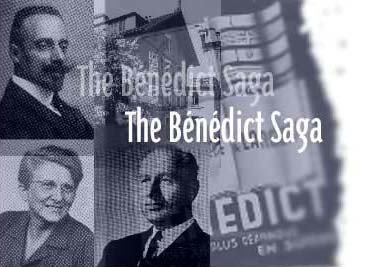
The Bénédict family
In the heart of Europe,
at the crossroads of languages and cultures,
one family’s work is entirely devoted to teaching.
Teaching philosophy
“The greatest wisdom is to teach what is useful”, so goes the motto under which Dr. Bénédict built up his teaching career and system, a motto still valid today. With his extraordinary gift for teaching in a communicative style, he was able to put the most complex matter simply in a form easy to grasp.
The secret of his formula: languages are but a part – even though an essential and highly effective one – of professional training. Basic material leads gradually to more complex evaluations and eventually to specialisation, such as correspondence, administrative and managerial tasks, typing and computer mastery, law, accountancy, and even simultaneous translation.
More than many other institutes, the International Bénédict Schools stress the importance of personalized relationships between staff and students. For their hundreds of thousands of graduates, the Bénédict Schools’ high quality and dedication have become a hallmark.
Franchised schools: the magic touch
From the very beginning, all Bénédict Schools have benefited from an unswerving policy of loyalty. Each unit remains entirely independent and belongs in full to its acting headmaster. This results in an enormous advantage for everyone concerned: close personal relationships, absolute reliability, great efficiency, and the most profitable cost/price ratio.
The Bénédict family
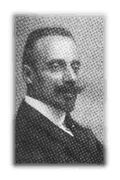
The founder, Simon Bénédict (1873-1933), a French-Alsacian, i.e.perfectly bilingual, opened, at the end of the nineteenth century, a first school in Egypt, followed later by a series of others in Switzerland.
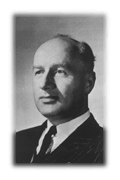
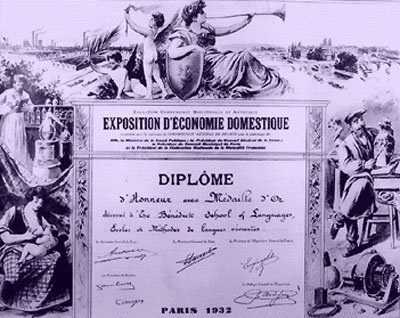
His son, Gaston (1900-1953), took over in 1928 and launched the Bénédict school movement in Lausanne. Giving business and language tuition to students of all ages, these schools met with rapid success all over Europe, with more than 40 establishments in operation before the Second World War.
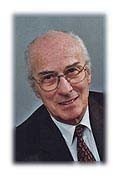
His grandson, Jean Bénédict (1928-2025) took up the challenge on his father’s premature death and gave new impetus to the school group both in quantity and quality. His three sons ensure a bright outlook for the future.
The forerunners:
- Paracelsus (1493-1541), physician, professor at Basle University.
- Heinrich Pestalozzi (1746-1827), teacher and advocate of universal education.
- Karl Barth (1886-1968), theologian, professor at Basle University.
- Jean Piaget (1896-1980), child psychologist, professor at Geneva University.
These prominent figures paved the way for a high-quality education system whose influence has extended far beyond our borders. Switzerland has the highest density of private schools in the world. Every continent is represented among its many institutions.
The power of private school
Only private schools can offer tuition perfectly tailored to each student, efficient, brisk and personalized, given by specialists engaged in the daily world of trade and business. Curricula are instantly adapted to needs and meet the demands of immediate application in the field. Small classes enable closely personalized attention to each student’s effective needs, in a cheerful atmosphere. Pedagogical means are constantly being brought up to date and reshaped at all times. This represents a huge advantage to learners.
Universally recognized certificates and diplomas are awarded at the end of courses. International exchanges and interesting job offers enable graduates rapidly to begin working towards stimulating and promising careers.